
Bleached vs. Unbleached Coffee Filters: Key Differences
Compare bleached vs. unbleached coffee filters, including taste, water flow, brewing temperature, safety, and environmental differences.
Taylor
8/12/202613 min read

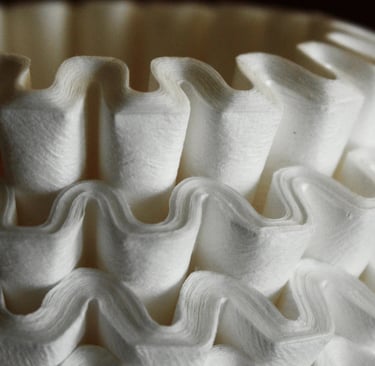
If you’re choosing between bleached and unbleached coffee filters, both can make excellent coffee. The main differences are how the paper is processed, how much paper flavor it may contribute, and whether you prefer a white or natural-brown filter. Once the filter is rinsed, most people will notice little difference in the finished cup.
TL;DR
Bleached and unbleached filters generally brew coffee in the same way.
Unbleached filters are more likely to add a faint paper taste if they are not rinsed.
Filter thickness and construction affect water flow more than paper color.
You do not need to change your brewing temperature based on the filter.
Modern white and natural-brown coffee filters are both made for food contact and normal coffee brewing.
Walk down the coffee aisle and you will probably see two versions of the same filter sitting next to each other. One is bright white, while the other is light brown. The brown filter looks more natural, so it is easy to assume that it must be healthier, more environmentally friendly, or better for the coffee.
The truth is less dramatic. Some coffee drinkers worry that white filters contain bleach that will end up in their morning cup. Others avoid brown filters because they have experienced an unpleasant cardboard taste. Both concerns come from something real, but neither tells the whole story.
Bleached and unbleached filters are made from similar paper materials and perform much the same job. The differences become clearer when you look at how they are produced, how they affect taste, and how the paper itself controls the brewing process.
What Is a Bleached Coffee Filter?
A bleached coffee filter begins with the same naturally brown paper pulp used to make an unbleached filter. The manufacturer adds a whitening step that removes the paper’s natural color and gives the finished filter its clean, white appearance.
Modern manufacturers may use oxygen-based processing or elemental chlorine-free methods rather than older bleaching practices. For example, Chemex says its white filter paper is oxygen cleansed so that no chemical residue or taste is imparted to the filter. Melitta identifies its white cone filters as elemental chlorine free.
This does not mean the finished filter is soaked in household bleach or that bleach is released into your coffee. The whitening process takes place during manufacturing, and the finished paper is produced specifically for use with food and beverages.
Older chlorine-based paper production methods created reasonable environmental concerns, particularly around the formation of unwanted byproducts. That history is one reason some people still feel uneasy about white filters. However, the word “bleached” covers several different production methods, so it is more useful to check the manufacturer’s process than to judge the filter by color alone.
What Is an Unbleached Coffee Filter?
An unbleached filter skips the whitening stage and keeps the natural tan or light-brown color of the paper pulp. It still goes through the other steps required to turn wood pulp into filter paper, so “unbleached” does not mean raw or completely unprocessed.
Many people choose brown filters because they prefer products that have gone through fewer manufacturing steps. Others simply like their natural appearance or feel that they fit better with an environmentally conscious coffee routine.
That does not automatically make them better for the environment, healthier, or more effective. An unbleached filter is still a disposable paper product, and its total environmental impact depends on far more than whether the paper was whitened.
Do Bleached or Unbleached Filters Make Better-Tasting Coffee?
For most coffee drinkers, neither filter has a clear advantage once both have been rinsed properly. The beans, grind size, water, coffee-to-water ratio, and brewing technique have a much greater effect on flavor than the color of the filter.
The most noticeable difference appears when a filter is used straight from the package without rinsing. Unbleached paper is somewhat more likely to contribute a mild papery, woody, or cardboard-like taste. It may be subtle, but it can become noticeable in delicate coffees with floral, fruity, or tea-like flavors.
White filters tend to have a more neutral taste because the whitening process removes or changes some of the compounds associated with raw paper aroma. That is one reason white filters are common in specialty coffee shops, where baristas are trying to keep every unwanted flavor out of the cup.
Still, a brown filter does not automatically make coffee taste bad. A thorough rinse with hot water usually reduces the difference enough that many people would struggle to identify which filter was used.
If you are curious, try a simple comparison at home. Place one white filter and one brown filter in separate brewers, rinse each with the same amount of hot water, and allow the water to cool. Tasting the rinse water by itself can make any paper flavor much easier to detect than tasting it through brewed coffee.
Should You Rinse Coffee Filters Before Brewing?
Rinsing a paper coffee filter is a useful habit regardless of its color. Place the filter in the brewer and pour hot water evenly over the entire surface before adding the ground coffee.
The rinse washes away loose paper dust and reduces the possibility of a papery flavor. It also helps the filter settle against the walls of the brewer, which can make pouring and extraction more consistent.
Hot water also preheats the brewing device and serving vessel. Without preheating, a cool ceramic, glass, or metal brewer can pull heat away from the brewing water as soon as you begin pouring.
Remember to discard the rinse water before adding your coffee. It is a small step, but it can make the brewing process cleaner and more repeatable.
White filters may need less rinsing to taste neutral, but rinsing them is still worthwhile. Brown filters often benefit from a slightly more generous rinse, particularly if you can smell the paper when you open the package.
Do Bleached and Unbleached Filters Need Different Water Temperatures?
You do not need to use different water temperatures for white and brown coffee filters. Filter color does not meaningfully change the temperature required to extract coffee.
For many hot filter-coffee recipes, water in the general range of 195°F to 205°F works well. However, the ideal temperature may vary with roast level, grind size, brewing method, and the flavor you are trying to achieve.
Temperature affects how quickly extraction takes place, but the finished extraction and brew strength are what matter most in the cup. Research discussed by the Specialty Coffee Association found that brew temperature had little effect on the sensory profile when brew strength and extraction were held constant.
In practical terms, that means you should adjust temperature for the coffee rather than the filter. A darker roast may taste better with slightly cooler water, while a light roast may benefit from hotter water or a longer extraction. Switching from a white filter to a brown one is not, by itself, a reason to change the temperature.
If your coffee tastes sour, weak, bitter, or hollow, examine the grind, brew time, ratio, pouring technique, and water quality before blaming the filter’s color.
Does Water Pass Through Both Filters at the Same Rate?
Bleached and unbleached filters can allow water to pass through at similar rates, but color alone does not determine flow. Paper thickness, fiber structure, pore size, shape, seams, and manufacturing consistency have a much greater effect.
Two filters that look almost identical can produce noticeably different drawdown times if they were made by different companies or manufactured at different facilities. One brand may use dense paper that slows the brew, while another may use a thinner or more porous sheet.
Even filters from the same product line can occasionally vary between production batches. Coffee brewers sometimes notice that a new package drains faster or slower than the previous one, despite using the same recipe.
If you compare white and brown versions made to the same dimensions and specifications by the same manufacturer, their flow rates may be very close. However, you should not assume that every white filter flows faster than every brown filter, or the other way around.
The coffee itself can also slow the brew. Very fine grinds and the small particles known as fines can clog the filter’s pores. Some grinders produce more fines than others, and certain coffees create more of them during grinding.
Pouring technique matters as well. Aggressive agitation can move fines toward the paper and restrict flow, while a gentler pour may produce a faster drawdown. If your brew suddenly slows down, the filter may be involved, but it is only one of several possible causes.
Does Filter Thickness Affect the Coffee?
Filter thickness can influence flow rate, clarity, body, and the amount of sediment that reaches the cup. Thicker or denser paper generally captures more fine particles and oils, producing coffee that tastes cleaner and feels lighter on the tongue.
Chemex filters are a familiar example of heavier filter paper. Chemex says its bonded filters are designed to remove sediment and certain oils, helping produce the clear style of coffee associated with the brewer.
A thinner paper filter may allow water to pass through more quickly, though that is not guaranteed. Its pore structure and surface treatment matter just as much as its measured thickness.
This is why changing brands can affect your recipe even when the filters have the same shape. If a new filter drains much faster, you may need a finer grind. If it drains more slowly, a slightly coarser grind or gentler agitation may help.
The adjustment is based on actual brew behavior, not whether the new filter happens to be white or brown.
Is One Type Better for Pour-Over Coffee?
Both filter types work well for pour-over brewing. The better choice is the filter that fits the brewer correctly, drains consistently, and does not contribute an unwanted flavor.
Many specialty coffee brewers are commonly paired with white filters because those filters tend to taste neutral with minimal rinsing. This is useful when brewing coffees with delicate flavors that could be covered by even a small amount of paper taste.
Unbleached filters can produce equally enjoyable coffee when they are rinsed thoroughly. Someone who already preheats the brewer and rinses every filter may notice no meaningful difference.
Fit is more important than color. A filter designed for a Hario V60, Kalita Wave, Chemex, or Melitta-style cone should match that brewer’s shape and size. Folding, bunching, or forcing the wrong filter into place can create uneven flow paths and interfere with extraction.
The brewer and filter also function as a system. A thick Chemex filter does not behave exactly like a thinner cone filter, even though both may be white. Likewise, two brown filters made for different brewers should not be expected to produce the same drawdown.
What About Automatic Drip Coffee Makers?
Bleached and unbleached filters both work in automatic drip coffee makers as long as you choose the correct basket or cone shape. The machine does not need a different water temperature or setting based on filter color.
White filters may be slightly more convenient for people who do not rinse filters before using them. Their neutral paper character makes them less likely to contribute a noticeable taste, although the result varies by brand.
Brown filters work perfectly well in drip machines, but rinsing can be awkward if the filter basket does not detach easily. One option is to rinse the filter over the sink, allow the excess water to drain, and then place the basket back in the machine.
Make sure the filter sits flat and does not fold inward. A collapsed filter can allow grounds to spill into the pot or interfere with the machine’s water distribution.
Also check that the filter is large enough for the amount of coffee being brewed. Overfilling a small filter can cause the coffee bed to rise too high, especially during blooming, and may lead to overflowing or grounds in the finished coffee.
Are Unbleached Filters More Environmentally Friendly?
Unbleached filters avoid the whitening step, so they require one less stage of processing. That can be an advantage, but it does not tell you the filter’s entire environmental story.
The source of the wood pulp, forestry practices, energy use, water consumption, manufacturing efficiency, packaging, transportation, and disposal method all contribute to a filter’s footprint. A responsibly sourced white filter may compare favorably with a brown filter that provides little information about its materials.
Certifications can offer more useful information than color. For instance, the Forest Stewardship Council, commonly shown as FSC, certifies products associated with responsibly managed forestry and supply chains. Chemex states that its paper pulp suppliers are FSC certified, while Melitta lists FSC certification for certain white filters.
Some paper coffee filters can be composted along with the used grounds, but local rules matter. A filter labeled commercially compostable may require an industrial composting facility and may not break down under every home-composting condition.
Packaging is another consideration. A lightly packaged filter made nearby may have advantages over one shipped long distances in multiple layers of plastic, regardless of whether the paper is white or brown.
Choosing an unbleached filter can still be a reasonable personal preference. Just avoid treating brown paper as proof that the entire product is automatically more sustainable.
Are Bleached Coffee Filters Safe?
Coffee filters sold by established manufacturers are produced for food and beverage use. Modern white filters are not intended to release household bleach into brewed coffee, and manufacturers commonly describe methods such as oxygen cleansing or elemental chlorine-free processing.
The word “bleached” can sound alarming because most people associate it with a bottle of strong household cleaner. In paper manufacturing, however, it refers to a controlled process used to whiten pulp before the final filter is packaged.
People who prefer to minimize processed materials may still choose unbleached paper, and that is a perfectly reasonable preference. It is different, however, from claiming that a normal white coffee filter is inherently unsafe.
If you want more detail about a particular brand, check its packaging or website for terms such as oxygen bleached, oxygen cleansed, chlorine free, or elemental chlorine free. Manufacturers may also provide information about testing, sourcing, certifications, and compostability.
Why Do Many Coffee Shops Use White Filters?
Coffee shops care about repeatability. A customer ordering the same coffee on two different mornings expects it to taste familiar, and a neutral paper filter removes one possible source of variation.
White filters are often selected because they tend to require less rinsing before their paper character disappears. In a busy café, even a small practical advantage matters when baristas are preparing many drinks in a short period.
Appearance may play a role too. A white filter can make it easier to see how evenly the coffee bed is saturated and whether grounds are sticking to the paper, although this is a minor benefit.
None of this proves that white filters produce objectively better coffee. It simply explains why cafés may prefer a filter that is neutral, predictable, and easy to use within an established recipe.
Bleached vs. Unbleached Coffee Filters at a Glance
Common Myths About White and Brown Coffee Filters
Brown filters always make better coffee
The filter’s natural color does not make the coffee taste better. In fact, an unrinsed brown filter may contribute more paper flavor than a white one.
Coffee quality depends much more heavily on the beans, roast, grind, water, ratio, and extraction. A filter can influence the cup, but its color is not a reliable measure of performance.
White filters contain dangerous household bleach
A finished coffee filter is not a piece of paper dripping with household bleach. White filter paper is processed during manufacturing and produced for contact with food and hot water.
Specific whitening methods vary, so people who care about the details should check the manufacturer’s information. Oxygen-cleansed and elemental chlorine-free options are widely available.
Unbleached filters always drain more slowly
Some brown filters drain slowly, while others drain quickly. The same is true of white filters.
Flow depends on the filter’s fibers, pores, thickness, shape, and manufacturing process. Coffee grind and pouring technique can alter the drawdown even more.
You need cooler water for an unbleached filter
There is no brewing principle that requires cooler water simply because the paper is brown. Temperature should be chosen based on the coffee and the desired extraction.
Changing the filter brand may require a grind adjustment if the new paper changes the flow rate, but the paper’s color does not create a separate temperature rule.
Unbleached filters are always better for the planet
Skipping the whitening stage reduces one part of the manufacturing process, but sustainability involves the complete product lifecycle. Forestry, manufacturing, shipping, packaging, and disposal all matter.
Look for clear sourcing information and credible certifications rather than relying only on the filter’s appearance.
Which Coffee Filter Should You Choose?
Choose a white filter if you want a neutral-tasting paper that is less likely to affect the cup when rinsing is brief or skipped. White filters are also a practical choice for delicate coffees, café-style pour-overs, and anyone who values consistency.
Choose an unbleached filter if you prefer the natural color or want paper that has skipped the whitening stage. Give it a thorough hot-water rinse before brewing, especially when preparing a light or subtly flavored coffee.
You may also want to compare brands rather than colors. A well-made brown filter that fits your brewer and drains evenly can outperform a poorly matched white filter. The reverse is equally true.
Once you find a filter that works consistently, it makes sense to keep using it and adjust your recipe around its flow. Switching between several brands can introduce more variation than switching between bleached and unbleached versions from the same manufacturer.
Frequently Asked Questions
Can you taste the difference between bleached and unbleached coffee filters?
Some people can detect a difference, particularly when an unbleached filter has not been rinsed. Brown paper may contribute a mild woody, papery, or cardboard-like flavor. After both filters are rinsed thoroughly, the difference is often small and may be overshadowed by the coffee, water, grind, and brewing method.
Should you rinse a bleached coffee filter?
Yes. Although a white filter may have less noticeable paper flavor, rinsing can remove loose fibers, help the filter sit properly, and preheat the brewer. These benefits make rinsing worthwhile even when the filter already tastes neutral.
How much water should you use to rinse a coffee filter?
Use enough hot water to wet the entire filter thoroughly. The exact amount depends on the filter’s size and thickness, but the paper should be evenly saturated with no dry areas. Discard the rinse water before adding the coffee grounds and beginning the brew.
Do coffee filters change caffeine levels?
Paper filtration can affect which oils and fine particles reach the cup, but choosing a white filter instead of a brown one is unlikely to create a meaningful caffeine difference. The amount of coffee used, bean variety, grind, brew ratio, and extraction have a much greater effect.
Do unbleached filters need hotter water?
No. Use the same brewing-temperature approach you would use with a white filter. If changing filters alters the brew time, adjust the grind or pouring technique rather than assuming the water must be hotter.
Why does my coffee filter drain slowly?
Slow drainage can be caused by dense filter paper, a grind that is too fine, excess fines, heavy agitation, a clogged grinder, or a large amount of coffee in a small filter. Compare the brew time with previous batches and change one variable at a time.
Are white coffee filters chlorine free?
It depends on the manufacturer and product. Some white filters are oxygen cleansed, while others are described as elemental chlorine free. Check the packaging or manufacturer’s website when the processing method matters to you.
Conclusion
Bleached and unbleached coffee filters are more alike than they are different. Both can produce clean, flavorful coffee, both work at the same brewing temperatures, and neither color guarantees a particular flow rate.
The biggest practical difference is paper taste. Unbleached filters are more likely to contribute a papery note when used without rinsing, while white filters tend to taste neutral with less preparation. A good hot-water rinse makes the gap considerably smaller.
Beyond that, pay attention to the qualities that actually affect brewing: fit, paper construction, thickness, drawdown time, and consistency. Those factors matter more than whether the filter is white or brown.
Your beans, water, grinder, ratio, and technique will always have a greater influence on the finished cup. Choose a filter that fits your brewer, rinse it well, and use it consistently. That is more useful than worrying too much about its color.


