Distilled Water and Coffee (Why It Doesn't Work)
When Going Extreme Can Be...Too Extreme
Taylor
6/17/20263 min read
There’s a moment every serious coffee nerd goes through.
You start obsessing over grind size, dialing in ratios, even measuring extraction yield… and then you think: “Wait—what if I just use the purest water possible?”
Distilled water feels like the logical move. Clean slate. No impurities. Total control.
I’ve tried it.
And honestly? It wrecked the cup.
Let’s break down why.
Why Doesn’t Distilled Water Work for Coffee?
Here’s the truth: coffee brewing isn’t just about dissolving stuff—it’s about selective extraction. And distilled water simply doesn’t have the chemistry to do that job well. Remember distilled water is 99.99% water and hydrogen. That's it. No other elements. No other minerals.
Why Do Minerals Matter in Coffee Extraction?
Direct answer: Minerals like calcium and magnesium act as binding agents that help pull desirable flavor compounds from coffee grounds into the water.
Coffee extraction is basically controlled chemistry. When hot water hits ground coffee, it dissolves hundreds of compounds, commonly referred to as the soluble components in coffee such as acids, sugars, lipids, aromatics.
But here’s the catch…
Pure H₂O isn’t very good at grabbing those compounds on its own.
Minerals—especially calcium (Ca²⁺) and magnesium (Mg²⁺) (but potassium (K⁺) too)—act like tiny “hooks.” They latch onto flavor molecules and help carry them into your cup.
I’ve seen this firsthand when comparing brews side by side:
Same beans
Same grinder
Same method
Only difference? Water.
The distilled batch tasted… empty. Like the coffee never fully showed up. It's hard to explain but it just seemed like something was missing.
Why Does Distilled Water Make Coffee Taste Flat or Sour?
Direct answer: Without minerals, balanced extraction fails—sweet and complex flavors stay trapped, while acidity becomes more noticeable. Trust me, I get it, you expect “pure water” to give you clarity. Instead, you get a cup that feels thin, hollow, or maybe even slightly sour.
What's happening is the extraction becomes skewed. The sugars and body compounds are poorly extracted while the acids are still coming through; or even worse, nothing is coming through and you are just left feeling disappointed like the time when your mom told you she “got your favorite snack” from the store only to discover rice cakes or the off-brand pop-tarts...again. Who's with me?
Anyway...that imbalance is what creates that weird sour-flat combo. Not bright acidity (the good kind), but underdeveloped acidity.
It’s like biting into fruit that looks ripe but tastes… unfinished.
What’s the Ideal Water for Coffee Brewing?
Now we’re getting into the good stuff.
The best coffee water contains balanced minerals with a Total Dissolved Solids (TDS) range of ~75–150 ppm.
Here’s a quick breakdown:
This balance allows water to extract evenly—not too aggressively, not too weakly.
What Should You Use Instead of Distilled Water?
You might have read the table above and thought "okay so how does this help me?" I am glad you asked. Here's what you need to do:
Use mineral-balanced water sources like filtered tap water, spring water, or specialized coffee water solutions. I personally use natural spring water purchased from my local grocery store.
Here’s what actually works:
Filtered tap water (Brita-style): Removes chlorine, keeps minerals
Spring water: Naturally balanced
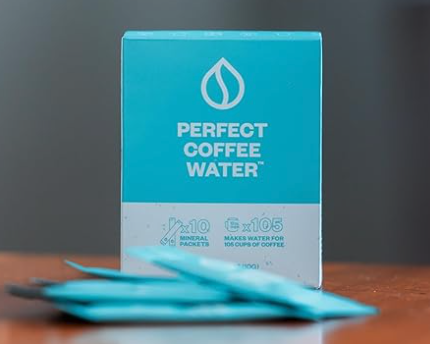
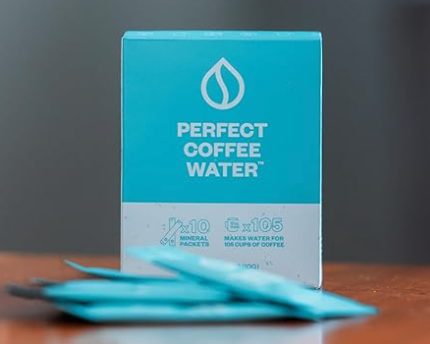
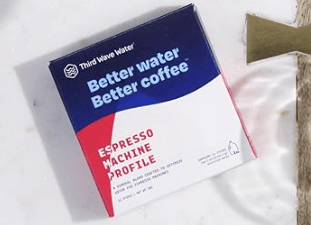
Mineral packets: Designed specifically for coffee brewing
Here are my favorite brands for mineral packets. You can't go wrong with either of these.
People Also Ask (PAA)
Can you mix distilled water for coffee?
Yes—but only if you remineralize it. Many pros mix distilled water with mineral packets to create a controlled brewing profile. See links above!
Is distilled water bad for espresso machines?
This is slightly debated within the coffee community but it seems like the consensus leans toward yes. Long-term use may cause issues with sensors and corrosion due to lack of buffering minerals.
What water do baristas use for coffee?
Most use filtered water, natural spring water, or custom mineral recipes (like the mineral packets mentioned above).
What TDS is best for coffee?
Generally 75–150 ppm. Lower can under-extract; higher can mute clarity.
Final Takeaway
Here’s the thing…
Distilled water sounds like control—but it actually removes one of the most important variables in coffee: mineral chemistry.
And without that?
You’re not unlocking flavor—you’re suppressing it.
If you’re serious about coffee, water isn’t just an ingredient.
It’s the foundation.
-Taylor
Source: